
Words carry meaning, history, and emotion. Just as names connect us to our family heritage, culture, and personal identity, important religious terms connect us to our beliefs and spiritual traditions. Parents often spend months searching for meaningful names because they understand that words can inspire values, character, and purpose throughout life.
In Islamic culture, certain words hold deep spiritual significance beyond their literal definitions. They remind believers of acts of worship, devotion, and closeness to Allah. One such beautiful and powerful term is tahajjud meaning, a phrase frequently searched by Muslims and those interested in understanding Islamic practices.
Tahajjud is more than a word. It represents dedication, sincerity, and a special connection between a believer and Allah during the quietest hours of the night. Throughout Islamic history, this prayer has been associated with spiritual growth, inner peace, and divine blessings.
This comprehensive guide explores the exact meaning of Tahajjud, its Arabic roots, pronunciation, historical background, religious significance, symbolism, and many other aspects that help explain why this practice remains so important in the lives of millions of Muslims worldwide.
What Is the Exact Meaning of Tahajjud?
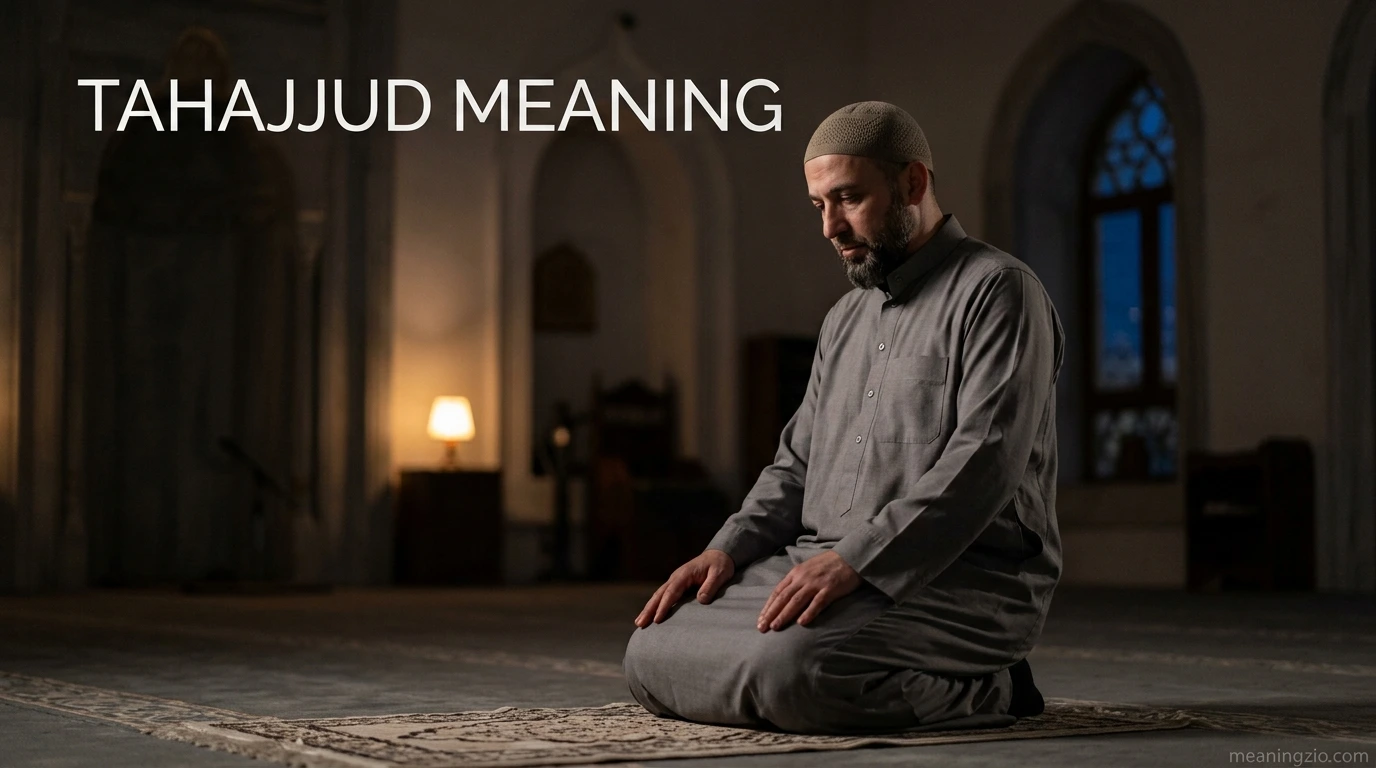
Tahajjud is a voluntary night prayer performed after sleeping and before the time of Fajr (dawn prayer).
The word refers specifically to waking up from sleep during the night to engage in worship and prayer. It is considered one of the most beloved forms of voluntary worship in Islam.
Simple Definition
TermMeaningTahajjudVoluntary night prayer after sleepingLanguageArabicReligious CategoryNafl (optional worship)TimeAfter Isha and before FajrImportanceHighly recommended in Islam
The concept emphasizes making a conscious effort to leave one’s bed and dedicate time to prayer, reflection, and supplication.
Origin and Arabic Roots of Tahajjud
The origin of Tahajjud comes from the Arabic root word:
ه ج د (H-J-D)
This root relates to sleeping and awakening from sleep.
Arabic Breakdown
Arabic Word Transliteration Meaning تهجد Tahajjud Night worship after sleep هجد Hajada To sleep تهجد Tahajjada To wake for prayer
The linguistic origin highlights an important aspect of the practice: worship performed after a person has slept and then awakened specifically for devotion.
How to Pronounce Tahajjud Correctly
Many people encounter this word while reading Islamic literature and may wonder about its correct pronunciation.
Pronunciation Guide
Tahajjud
Phonetic spelling:
Ta-haj-jud
Pronunciation Table
PartSoundTaLike “ta” in targetHajSimilar to “huj” with a soft hJudLike “jood” but shorter
Common Pronunciation Mistakes
- Ta-ha-jood
- Tah-jud
- Ta-ha-jad
- Tehajjud
Listening to native Arabic speakers can help improve accuracy and confidence.
Religious Meaning in Islam
The religious meaning of Tahajjud goes beyond its linguistic definition.
In Islam, Tahajjud symbolizes:
- Sincerity in worship
- Personal devotion
- Spiritual discipline
- Closeness to Allah
- Private communication with the Creator
Unlike obligatory prayers, Tahajjud is performed voluntarily, making it a reflection of a believer’s genuine desire to seek Allah’s pleasure.
Because it is offered when most people are asleep, it is often viewed as an especially sincere act of worship.
Historical Background of Tahajjud
The historical background of Tahajjud dates back to the earliest days of Islam.
The practice was highly emphasized during the lifetime of the Prophet Muhammad ﷺ. Historical Islamic sources describe how the Prophet regularly performed night prayers and encouraged believers to adopt this spiritually uplifting practice.
Early Muslims viewed Tahajjud as an essential part of personal spiritual development.
Throughout Islamic history:
- Scholars practiced it regularly.
- Spiritual leaders emphasized its importance.
- Devout Muslims incorporated it into daily life.
- Communities recognized it as a source of blessing and guidance.
Its enduring presence demonstrates its profound impact on Islamic spirituality.
Spiritual and Symbolic Meaning
The symbolic meaning of Tahajjud is rich and inspiring.
Symbolic Representations
SymbolMeaningNightReflection and tranquilityAwakeningSpiritual awarenessPrayerConnection with AllahSilenceSincerity and focusDawnHope and renewal
The act of rising during the night symbolizes overcoming comfort and distractions for a higher purpose.
Many believers associate Tahajjud with:
- Personal transformation
- Inner peace
- Emotional healing
- Spiritual strength
- Renewed faith
Why Is Tahajjud Considered Special?
Several factors make Tahajjud unique among voluntary acts of worship.
Special Characteristics
- It requires effort and sacrifice.
- It is performed in privacy.
- It encourages sincerity.
- It allows uninterrupted focus.
- It strengthens spiritual discipline.
The quiet atmosphere of the night creates an ideal environment for reflection, gratitude, repentance, and heartfelt supplication.
Many Muslims consider Tahajjud a powerful opportunity to seek guidance during difficult times.
Benefits Associated with Tahajjud
While the primary purpose is worship, many believers report emotional and spiritual benefits from regular night prayer.
Spiritual Benefits
- Increased faith
- Stronger relationship with Allah
- Greater mindfulness
- Enhanced gratitude
- Improved self-discipline
Emotional Benefits
BenefitDescriptionPeaceReduced stress and worryReflectionTime for personal evaluationHopeRenewed optimismFocusBetter clarity of purposeGratitudeIncreased appreciation
These benefits contribute to why many Muslims cherish this practice.
Personality Traits Associated with Those Who Perform Tahajjud
Although Tahajjud is not a name, people who consistently perform it are often admired for certain positive personality traits.
Commonly Associated Traits
- Discipline
- Patience
- Humility
- Perseverance
- Gratitude
- Compassion
- Self-control
- Dedication
These qualities emerge because waking up during the night requires commitment and consistency.
Trait Overview
TraitConnection to TahajjudDisciplineMaintaining a routinePatienceConsistent worshipHumilityPrivate devotionFocusSpiritual prioritiesDeterminationOvercoming comfort
Cultural Significance Across Muslim Communities
The cultural significance of Tahajjud extends across the Muslim world.
From Asia and the Middle East to Africa and Western countries, Muslims recognize Tahajjud as a highly respected form of worship.
It often becomes especially popular during:
- Ramadan
- The last ten nights of Ramadan
- Times of hardship
- Periods of personal reflection
Families and communities frequently encourage younger generations to learn about this meaningful practice.
Is Tahajjud Used as a Personal Name?
Tahajjud is generally not considered one of the traditional Islamic names or baby names used for boys or girls.
Comparison
CategoryStatusPersonal NameRareReligious TermYesIslamic PracticeYesBaby NameUncommon
Parents typically choose Islamic names derived from prophets, companions, virtues, or meaningful Arabic words.
While Tahajjud itself is not a common personal name, its spiritual association gives it a unique place within Islamic vocabulary.
Popular Islamic Names Related to Spiritual Values
Those inspired by the meaning of Tahajjud may appreciate Islamic names associated with faith and devotion.
Boys’ Names
NameMeaningAbdullahServant of AllahIbrahimProphet AbrahamZaydGrowth and abundanceSalmanSafe and secureHamzaStrong and steadfast
Girls’ Names
NameMeaningAminaTrustworthyMaryamPure and devotedFatimaCaptivating and nobleHafsaYoung lionessNoorLight
These names remain popular choices among Muslim families.
Nickname Ideas Inspired by Spiritual Themes
Since Tahajjud is not commonly used as a personal name, traditional nicknames are uncommon.
However, spiritual-themed affectionate terms sometimes include:
- Noor
- Dua
- Iman
- Deen
- Barakah
Families may use such words informally to reflect cherished Islamic values.
Sibling Name Ideas for Islamic Families
Parents looking for harmonious sibling names often choose names that share religious meaning and cultural significance.
Boys
- Yusuf
- Musa
- Umar
- Bilal
- Hassan
Girls
- Khadija
- Aisha
- Ruqayyah
- Zainab
- Sumayyah
Example Pairings
BrotherSisterYusufMaryamUmarAishaHassanZainabBilalHafsa
These combinations are timeless and widely appreciated.
Famous People Associated with Tahajjud
Since Tahajjud is not a personal name, there are no widely recognized celebrities or historical figures named Tahajjud.
However, many respected Islamic scholars, spiritual leaders, and righteous individuals throughout history were known for their dedication to night prayer.
Examples include:
- Imam Al-Ghazali
- Imam Ahmad ibn Hanbal
- Imam Al-Nawawi
Their devotion helped establish Tahajjud as a cherished spiritual practice across generations.
Common Misunderstandings About Tahajjud
Several misconceptions exist regarding Tahajjud.
Myth 1
Only scholars can perform it.
Reality: Any Muslim can perform Tahajjud.
Myth 2
It requires many hours.
Reality: Even a short prayer can qualify.
Myth 3
It is obligatory.
Reality: It is voluntary but highly recommended.
Myth 4
It can only be performed during Ramadan.
Reality: It may be performed throughout the year.
Understanding these facts helps people approach the practice with confidence.
FAQs
What does Tahajjud mean?
Tahajjud refers to a voluntary night prayer performed after sleeping and before dawn.
What language does Tahajjud come from?
It originates from Arabic and derives from roots connected to sleeping and awakening.
Is Tahajjud a name?
No, it is generally a religious term rather than a personal name.
What is the religious meaning of Tahajjud?
It signifies voluntary worship, devotion, and closeness to Allah during the night.
How do you pronounce Tahajjud?
It is pronounced as Ta-haj-jud.
Why is Tahajjud important?
It is valued for its spiritual benefits, sincerity, and role in strengthening faith.
Is Tahajjud only performed in Ramadan?
No. Muslims may perform it any time during the year.
What is the symbolic meaning of Tahajjud?
It symbolizes spiritual awakening, dedication, and a personal connection with Allah.
Conclusion
Tahajjud is one of the most beautiful concepts in Islamic spirituality. Rooted in Arabic language and Islamic tradition, it represents much more than a voluntary prayer. It symbolizes commitment, sincerity, discipline, and a deep desire to draw closer to Allah during the peaceful hours of the night.
Its historical background, religious meaning, symbolic significance, and enduring cultural importance have made it a cherished practice for Muslims across generations. While Tahajjud is not commonly used among Islamic names, baby names, modern names, unique names, or popular names, its spiritual value continues to inspire believers worldwide.
Whether you are learning about Islamic traditions, exploring Arabic roots, studying religious terminology, or seeking a deeper understanding of worship, Tahajjud remains a powerful reminder that moments of quiet devotion can have a lasting impact on the heart, mind, and soul.
